
The cutting
method for FR4 fiberglass boards needs to be selected based on the board
thickness, precision requirements, and production dimensions. It's crucial to
ensure a smooth surface and dimensional accuracy while avoiding cracking or
fiber exposure due to improper handling. Below are common cutting methods and
key operational points:
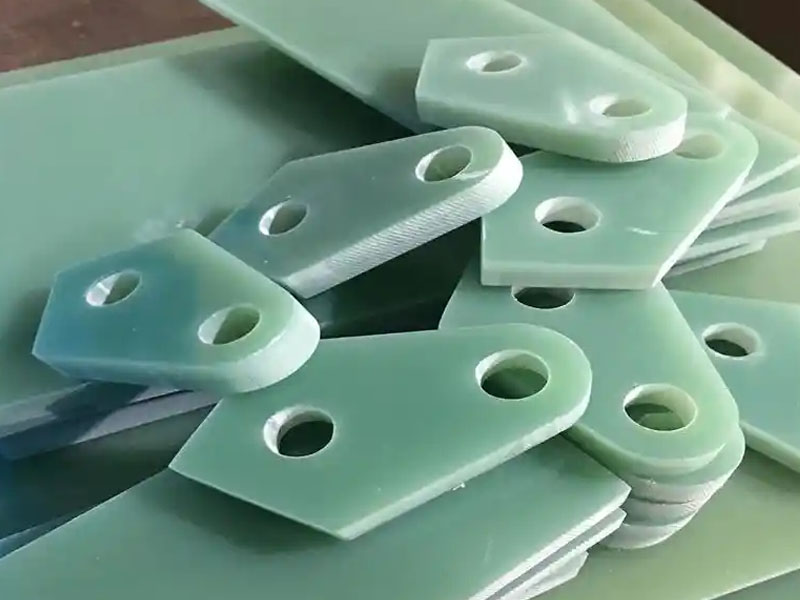
1.Manual
Cutting (Suitable for thin sheets and small batch processing)
Utility Knife
Slicing Method: Suitable for thin sheets with a thickness ≤3mm. To operate,
first fix a ruler along the cutting line. Use a utility knife (industrial-grade
high-hardness blade recommended) to repeatedly score along the ruler until the
depth reaches 1/3-1/2 of the sheet thickness. Then, place the sheet along the
scored lines on the edge of a table and press down firmly with both hands to
break it.
Hand saw cutting
method: Suitable for boards with a thickness of 3-10mm. Use a fine-toothed
hacksaw (≥18 teeth/inch). When cutting, keep the saw blade perpendicular to the
board and advance slowly and evenly to avoid excessive force that could cause
the board to crack. After cutting, use a file to smooth the cut to prevent
fiberglass from pricking your hands.
2. Mechanical
Cutting (Suitable for medium and heavy plates and batch processing)
Electric
Saw/Circular Saw Cutting Suitable for plates with a thickness of 5-50mm, with
high efficiency. Requires a diamond saw blade or a carbide saw blade (the
number of teeth depends on the thickness; use a fewer-tooth blade for thicker
plates and a more-tooth blade for thinner plates). Adjust the saw blade speed
during cutting (usually 3000-5000 rpm). The plate must be secured with clamps
to prevent vibration from causing a skewed cut. Simultaneously, use water or
compressed air to cool the saw blade and the cut to prevent the resin from
scorching due to high temperatures.
Milling/Engraving
machine cutting is suitable for scenarios requiring high-precision cutting of
irregular shapes (such as complex contours and openings). By installing a
milling cutter (made of carbide or diamond), milling is performed along a
preset path with an accuracy of ±0.1mm. During operation, the feed rate must be
controlled (typically 50-200mm/min); excessive feed rate can easily lead to
delamination of the sheet metal or tool wear.
3. High-Precision Cutting (Suitable for Precision Parts Machining)
Laser Cutting is
suitable for sheet materials with a thickness ≤10mm and requiring a smooth cut.
It utilizes a high-power laser beam (CO₂ laser or fiber laser)
to melt and evaporate the material, achieving non-contact cutting with
burr-free cuts, high precision (±0.05mm),
and no mechanical stress that could cause sheet material deformation. However,
laser cutting can cause slight carbonization of the resin at the cut, requiring
post-processing (such as grinding) in applications with strict insulation
requirements.
Waterjet cutting
is suitable for various thicknesses (especially plates thicker than 20mm) and
heat-sensitive applications. It uses a high-pressure water jet (mixed with
abrasives such as garnet) to erode and cut, eliminating the heat-affected zone
and producing a clean, smooth cut. It can cut complex shapes. However, the
equipment is relatively expensive and is best suited for mass production and
precision machining.
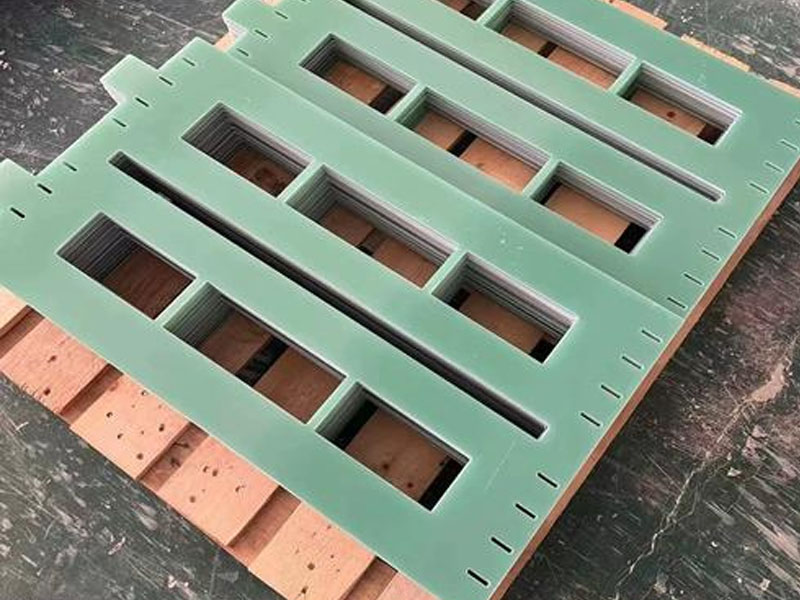
Cutting
Precautions
Safety
Protection: Fiberglass dust and debris will be generated during cutting. Wear a
dust mask, goggles, and gloves to avoid inhalation or skin contact (fiberglass
may cause itching).
Avoid
Overheating: Insufficient heat dissipation during mechanical cutting can cause
the resin to soften and stick to the blade, affecting the cut quality. Prompt
cooling is necessary.
Secure Fixation:
Regardless of the cutting method, the sheet material must be securely fixed to
the worktable to prevent slippage that could lead to dimensional deviations or
accidents.
Post-Cutting
Processing: After cutting, use sandpaper, a file, or a dedicated deburring tool
to treat the cut edges, removing sharp edges and exposed fibers to ensure safe
use.



Xiamen JY Machinery Technology Co.,Ltd




